
Description
Nail Care
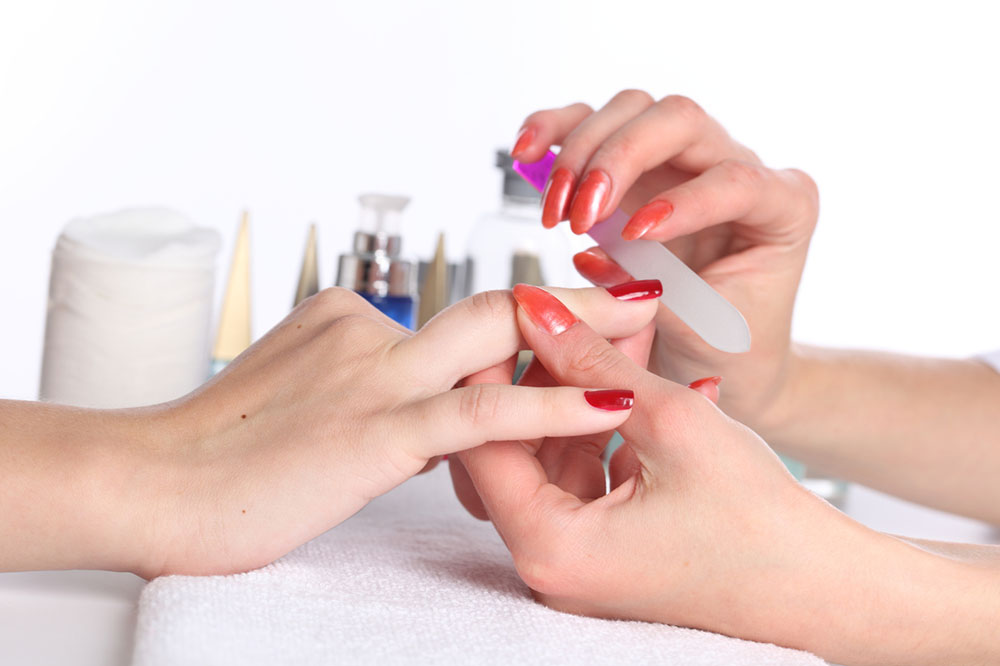
Nail care refers to the proper maintenance of the fingernails and toenails. Nail care is important because it helps prevent nail problems, such as fungal nail infections and ingrown toenails. Nails are considered healthy if they are smooth and uniform in color and consistency. Healthy nails do not have ridges or grooves, and they do not have spots or discoloration. In order to maintain healthy nails, it is recommended that individuals keep the nails clean, trimmed, and moisturized. Moisturizing the nails helps prevent the nails from becoming brittle and breaking or cracking.
Nail Art
Nail art is a creative way to decorate nails. It is a type of art which can be done on fingernails and toenails. It became commonly known in beauty salons and it is considered as fashion activity. Nail art and Nail design has come a long way. No longer is this medium reserved for special occasions. In today’s style world, nail art is the hottest new accessory. Your nails can tell a lot about you and are like your own personal canvas for spectacular creations. Nail Art is a fun way to brighten up your everyday look or accessorize a special occasion outfit. The key to any successful nail art and well-shaped nails. Nails should be neatly trimmed and filed before painting. With Institut Abir, it’s no longer just about bold solid colors or eye-catching metallics. Inspired by celebrities, fashion blogs and magazines, enthusiasts are embracing all manner of experimentation: intricate floral patterns and cartoon characters, glittery mosaics, 3-D motifs emblazoned with lace, gems, charms, foils, even magnets. The shapes of nails are even changing, from traditional round and square to diagonal and borderline-threatening almonds and pointy stilettos. Nail art is very accessible. If you think you’re too curvy or too straight, too young or too old, it doesn’t matter because you can still have beautifully groomed nails. It’s not that expensive and it’s not life changing like getting you hair cut short. If you don’t like it after a day or two, take it off.
Acrylic nails
Acrylic nails are made by dipping a brush in to a liquid (called monomer) and then placing the wet brush in a powder (called polymer), creating a ball of product that is then placed on the nail bed and patted in to place. The product is allowed to cure for a few minutes before filing, but the curing process continues over the next 48 hours. Acrylic nails have been around for a very long time and are quite popular. Most nail salons offer them, and many nail technicians have a lot of experience working with this type of artificial nail. That said, they can also be a bit unnatural looking if applied incorrectly or in a hurry, and are occasionally difficult to remove without damaging the nail below. There is also a strong smell associated with some of the chemicals that are involved in the process, which can make the application unpleasant.
Artificial nails
Artificial nails, also known as fake nails, false nails, fashion nails, nail enhancements, or nail extensions, are coverings placed over fingernails as fashion accessories. The artificial nails are not a replacement, but an extension for natural nails. There are two main approaches to creating artificial nails—tips and forms. Tips are made of lightweight plastic plates that are “nail”-shaped. They are glued on the end of the natural nail and acrylic is then applied over the entire nail.
Pedicure
A pedicure is a cosmetic beauty treatment for the feet and toenails, and can also help to prevent nail diseases such as Athlete’s Foot, fungus and ingrown toenails.
French wrap
Dashing Diva Professional’s original innovation in long-lasting French manicures, French Wrap is easily applied over fingernails and is optimal for toenails. With a slightly squarish shape, and band thickness between French Wrap Plus Thin and Thick bands, no housing applicator makes the French band simple to spread and provides flawless results.
Gel polish
Gel products are pre-mixed and are in an actual “gel” form. A brush is used to pick up a portion of gel and place it on the nail bed, and then it is brushed and coaxed in to position. Then the finger is placed in a low-wattage UV light to cure the gel. Once it is removed from the light, it is fully cured. gel nails do not require the same type of strong-smelling chemicals to apply or remove them. Gel nails are also thinner and more flexible than their acrylic counterpart and may be a better choice for women with thin, soft nail beds.



Reviews
There are no reviews yet.